Colour returns to Iryna’s life as humanitarians reach Ukraine’s most vulnerable people
Across Ukraine, humanitarian organizations are providing vital care and restoring dignity for thousands of displaced people.
Iryna faced an impossible choice when the war in Ukraine reached her hometown, Berdiansk, in 2022. Her mother urgently needed medicine that was no longer available in the city under occupation.
“There was only one option: I had to leave, to walk, to deliver the medicines needed,” Iryna recalled. She and another woman walked for two days, trying to escape the war-torn city.
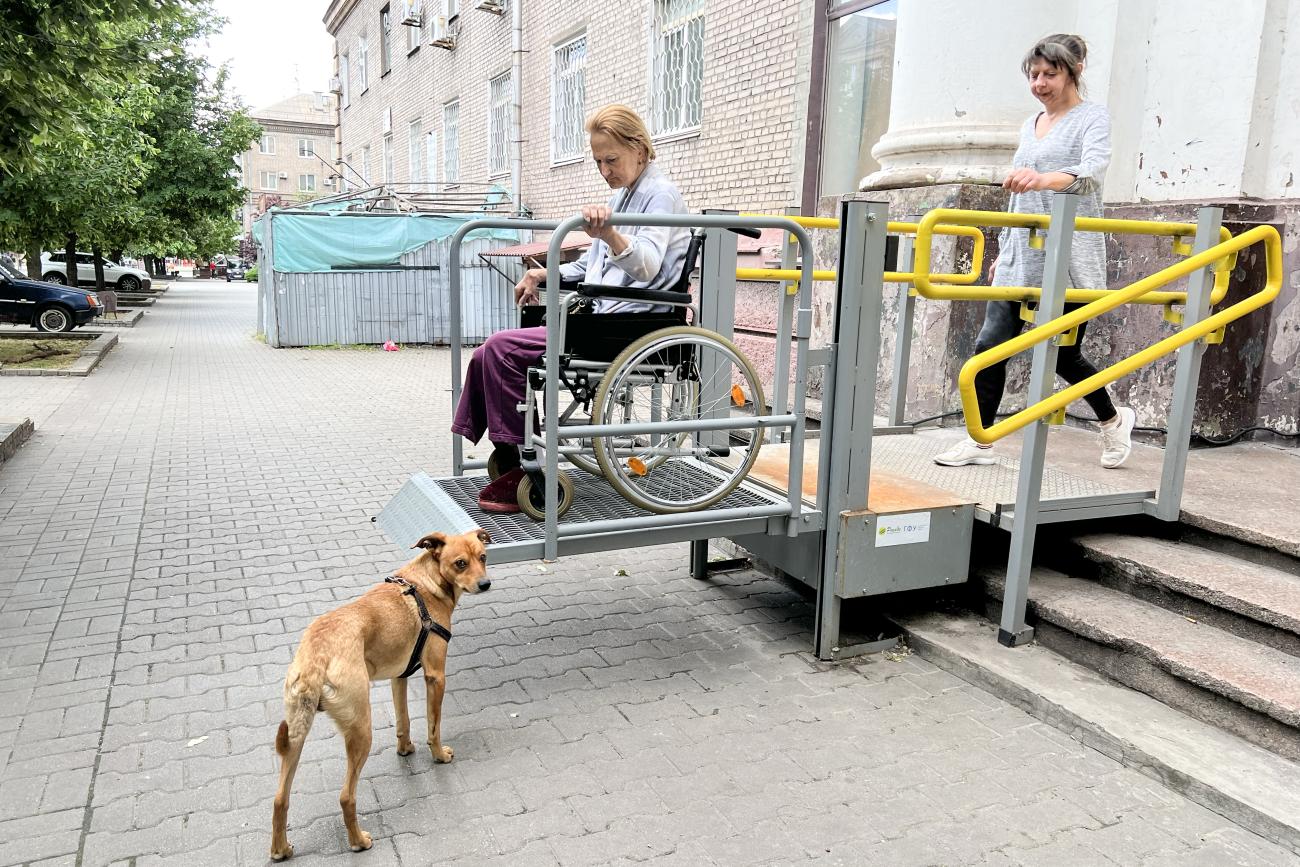
They both reached Zaporizhzhia City and ensured that Iryna’s mother received the necessary treatment. But Iryna’s health soon deteriorated. Her leg was amputated due to a serious illness, and weakness in her arms left her unable to move independently. For more than three years, she has lived in a collective centre for displaced people, dependent on a wheelchair.

Restoring dignity through support
To support Iryna, non-governmental organization Rokada Charitable Foundation, with funding from the OCHA-managed Ukraine Humanitarian Fund, arranged transport to doctors, and access to specialists and psychosocial care.
“For me, Rokada’s work has been extremely valuable, especially the psychologist,” Iryna said. “At first it was hard to open up, to speak about what hurt. It took time. Now, with other residents in the collective site, we are more than neighbours – we have become family.”

Rokada installed two ramps and adapted the centre’s bathrooms, meaning Iryna and other residents with disabilities can now move around more freely.
“Now I can go to the hospital or the shop by myself,” she said. “Without Rokada’s help, I would just sit and stare out the window – my life would have ended there.”
Iryna is one of thousands of Ukrainians with disabilities living in collective centres after fleeing front-line areas or losing their homes. According to the latest situation overview on population profiling in collective centres, about 72,000 vulnerable displaced people – including older people, people with disabilities and households with limited resources – live in some 1,500 collective sites across the country. Supporting these groups is one of four priorities under the Ukraine 2025 Humanitarian Needs and Response Plan. By the end of August more than 130,000 displaced people with disabilities had received at least one type of humanitarian assistance in 2025.
Across Ukraine, organizations such as Rokada – supported by pooled funds – are providing vital care and restoring dignity for thousands of displaced people.
Iryna still does not know what tomorrow will bring. But thanks to the support she has received, she says her world is no longer black and white. Colour has returned to her life.

By Olena Danylyshyn, Rokada Charitable Foundation and Viktoriia Andriievska, OCHA



Written by
UN entities involved in this initiative
Goals we are supporting through this initiative