

Latest
The Sustainable Development Goals in Ukraine
The Sustainable Development Goals (SDGs) are a global call to action to end poverty, protect the earth’s environment and climate, and ensure that people everywhere can enjoy peace and prosperity. These are the goals the UN is working on in Ukraine:
Publication
01 May 2025
United Nations in Ukraine Annual Results Report 2024
In 2024, jointly with partners, the UN worked on restoring critical water, transport and social infrastructure for over 3 million people while over 10 million benefited from the rehabilitated energy infrastructure. The UN delivered mental health, resilience-building and psychosocial services to almost 1.3 million people, including children. Significant advances were made in demining operations, fostering green economic growth and livelihoods, restoring housing, and strengthening institutional capacity. In addition, the UN provided life-saving support to 8.4 million people.The UN’s efforts in Ukraine were made possible by $936 million in funding from generous donor partners, including Germany, Japan, Norway, the European Union, and others with total expenditure of $685 million for 2024. More specific achievements in 2024 include:Demining and Safety: Over 15 million square meters of land cleared or surveyed, and more than 7 million individuals reached through mine risk education campaigns, including the 6,4 million with targeted media campaigns.Infrastructure Rebuilding: Critical infrastructure restored for 3.1 million Ukrainians, with major restoration of water, energy, and transportation systems.Energy Resilience: More than 10 million people benefited from rehabilitated energy infrastructure and energy efficiency measures.Social Protection: Social protection services were provided to nearly 1 million vulnerable individuals, strengthening local social safety nets.Economic Growth and Job Creation: Nearly 230,000 people were supported in rebuilding their livelihoods through various programs, including vocational training, labour initiatives, business grants and land rehabilitation.Housing: Nearly 31,000 people benefited from repaired residences.Education and Health: Over 627,000 young people reached with resilience support, and 664,000 adolescents accessed mental health services.
1 of 5

Press Release
02 October 2025
Ahead of winter: UNHCR will provide assistance to help the most vulnerable people in frontline regions get through the cold season
This winter, UNHCR’s response aims to help more than 389,000 war-affected people with specific vulnerabilities, including older people, people with disabilities, people with chronic illnesses and internally displaced people hosted in collective sites. The focus is primarily on people remaining in frontline areas of eastern and northern Ukraine, where the harsh winter season is compounded by war-damaged homes, disrupted power infrastructure, and limited access to critical services. “Preparing for winter means helping families stay resilient. They have endured so much already. By providing cash assistance, heating support and shelter repairs, UNHCR works so that the most vulnerable people make it through the winter in dignity and warmth,” said Alexander D. Mundt, Acting UNHCR Representative in Ukraine.UNHCR’s winter response programme, which is part of a larger inter-agency winter plan, aims to complement the Government efforts to support people in advance of winter. UNHCR, in collaboration with the Ministry of Social Policy and the Pension Fund of Ukraine, will provide cash assistance to help families cover winter-specific needs such as solid fuel, warm clothing, and other essentials – prioritizing those who live within 20 km of the frontline or border areas. Last winter, UNHCR helped over 250,000 vulnerable people with cash assistance for seasonal needs. A survey amongst the receiving households showed that their top need was heating, and so 88% of the households spent the money on solid fuel. As the ongoing Russian attacks continue to damage civilian homes and energy infrastructure, the need to support families to keep their homes warm during winter remains urgent and critical. To address this, UNHCR will distribute insulation kits which include heaters, reflective insulation screens, plastic sheets, foam strips, and building tape, that allow both private households and collective sites accommodating internally displaced people to retain heat and reduce energy costs. In addition, sub-standard homes and collective sites will be repaired and insulated, with improvements to roofs, attics, doors, and with installation of modern triple-glazed windows, enabling better heat retention and energy efficiency. UNHCR will also provide and install solid fuel heaters in frontline communities where access to electricity is limited and support the insulation of heating pipes and upgrades to communal heating systems in collective sites. UNHCR’s response is made possible thanks to funding from government and private donors, including our top donors such as the European Union, Germany, Japan, Norway, the United Kingdom and the United States of America.Over the 2024–2025 winter, UNHCR implemented a comprehensive winterization plan to help displaced, war-affected, and other vulnerable populations in Ukraine cope during the harsh and cold season. In total, 314,000 multi-sectoral interventions were delivered, including cash assistance, shelter and housing insulation support, and the distribution of essential winter items.
1 of 5
Story
28 August 2025
A land damaged by war, now being rebuilt by a determined and innovative people
In August 2024, Matthias Schmale started his assignment as the coordinator of the humanitarian and recovery response of the United Nations in Ukraine with a visit to the South. A year later, he returned to the cities of the brave, innovative and resourceful people.Day 1. Odesa and the regionFrom rehabilitating war-affected families and introducing solar-powered water systems to empowering women entrepreneurs, Odesa and the region is a place of creativity and resilience, driven by people who never stop moving forward.Rehabilitation to war-affected familiesWhen arriving at the Ukrainian Medical Center for Mother and Child, you are welcomed by a blooming garden with trees, benches, and a small fountain. This Center is truly unique: its mission goes beyond medical treatment, focusing on holistic rehabilitation for mothers and children, restoring mental health and rebuilding family life disrupted by war. "Today, our center serves 82 communities - internally displaced people, children of the deceased, prisoners of war, veterans, children who were left without a family, adopted children. The center is not only medical, but it also provides social support," says Nataliia, who has managed the rehabilitation center for the past two years. Since 2024, UNICEF has helped the center stay strong, renovating a bomb shelter, improving water and sanitation, and providing a vehicle for mobile medical teams. UNFPA opened a fully accessible gynaecological office for women with disabilities and survivors of gender-based violence, while IOM refreshed the interiors, making it a bright, welcoming place for families.“This is a fantastic investment from the UN family, both into supporting very vulnerable people, as well as providing institutional support to make an installation like this better and more dignified,” say Resident and Humanitarian Coordinator Matthias Schmale. Supporting infrastructure and economic development With financial support from France, IOM installed solar power stations in one of the cities in the Odesa region to run water pumping and treatment facilities, shifting operations to clean, renewable energy. These solar-powered stations now provide a reliable water supply to around 30,000 people, even during electricity outages, while cutting costs and reducing environmental impact. “Today we saw a great example of how we can contribute to saving money for the authorities, because solar energy means they are less dependent on the electricity grid. It helps individuals with managing their finances because of the stable tariffs and, of course, it’s an investment into green recovery,” explains Matthias Schmale. Another example is the FAO’s Wine Value Chain Support Project. This initiative is designed to strengthen small wine producers in Odesa region, enhance value‑chain integration and improve market participation for Ukrainian farmers. The Tairov Institute of Viticulture is one of the key FAO’s partners, pioneering climate‑resilient grape-growing, energy-efficient technologies, and turning winery waste into biofuels and dietary supplements. A true circular-economy approach. Connecting gender-based violence response with empowering women-led businesses for long-term economic recoveryThe roundtable to discuss gender-based violence response and recovery brought together UNFPA, implementing partners, key actors and government representatives. Around the table, participants spoke of systems and strategies, but it was the testimonies of those working closest to survivors that shaped the conversation. “What is the connection between GBV and economic recovery? The more we’re able to support women achieve economic independence, the more we’re also investing in the protection against the GBV”, underlined the UN Resident Coordinator. The “Pochatok” project, supported by UN Women from October 2023 to March 2024 and implemented by the NGO Small and Medium Business Support Consulting Center in Ukraine and funded by Japan, focused on helping women affected by the war — especially internally displaced persons (IDPs). The project supported 6,270 women, providing economic empowerment and resilience by offering a mix of entrepreneurial training, personalized mentorship, psychological support, networking opportunities, and small grants to help them start or grow their own businesses. "We wanted to create a place where women could come and join a community of women like themselves, and where children could also have their own community. That’s why we opened not only a bookstore, but a space where children and parents can grow and develop together,” says Olha, participant of the program who received a grant to support development activities in her bookstore called “A little hedgehog.”Day 2. Mykolaiv and Mykolaiv regionMykolaiv region was partially occupied in 2022, leaving a trace of destruction and pushing people to flee. After de-occupation, communities and individuals found ways to recover and move forward.Repairing houses, social infrastructure and supporting the most vulnerableIryna left the Mykolaiv region to live with her daughter while her husband stayed and saw the bombs falling, the house being destroyed and his loved ones being killed. “We were so far from the word ‘war.’ We never thought something like this could happen to civilians. The first civilian who was killed in our village was my husband’s brother. They started shooting, people went outside. No one imagined that civilians would be targeted,” says Iryna. Since Iryna returned, they have been rebuild their house and their life. They have a beautiful garden, dogs and rescued parrots. With support from UNHCR’s partner The Tenth of April, the family received materials to seal the roof and start repairs. The organization’s legal team also helped them navigate a complex court case to restore ownership of their home. However, the pressing issue of no available work, except for seasonal ones, remains. And psychological scars are left for a long time. Alongside supporting people affected by the war, UNHCR and UNDP are working together on a project to help communities recover and create conditions for safe and lasting returns. The project funded by the Community Recovery Fund focuses on strengthening social ties and empowering local activists. It also supports the rebuilding of community facilities that provide essential services and spaces where people can come together. In the rural areas of Mykolaiv, where infrastructure is limited, and mobile connectivity remains unstable, people with reduced mobility are especially dependent on social services for essential support. Lyudmyla, a pensioner whose home was damaged by shelling and later repaired through durable repairs, continues to receive support from a social facilitator under a program implemented by UNHCR and its NGO partner, The Tenth of April.“Over just two days, I saw a striking contrast to the reality of war. Sirens and alarms still interrupt daily life, but even in the midst of war, people are investing in their future. It is deeply inspiring to witness this resilience, and to see how the UN, working hand in hand with local authorities and NGOs, is helping to make it possible. The message is clear: we must continue investing in the future of this country,” sums up Resident and Humanitarian Coordinator.
1 of 5

Speech
21 September 2025
Message of the UN Resident and Humanitarian Coordinator in Ukraine Matthias Schmale on the International Day of Peace
Some of them told me they are in the 11th grade, so all their lives, school lives, they have seen and experienced their country at war and being aggressed against. Yet they have decided to be ambassadors of peace.In war and occupation, children have rights. They have the right to education, the right to health care, and the right to express themselves.And I want to finish my small remark by quoting the children themselves.The school principal asked them: "What does peace mean for you?"And let me read some of the answers they gave.Some of them said it means freedom.It means friendship.It means love to your family.It means having a heart.It means having a future, full of safety.
1 of 5
Publication
23 September 2025
Treatment of civilians deprived of their liberty in the context of the armed attack by the Russian Federation against Ukraine
👉 Click here for an illustrated webstory about the report's key findings
EXECUTIVE SUMMARY1. Large-scale deprivation of liberty, affecting both of civilians and military personnel, remains a stark reality in the ongoing armed attack of the Russian Federation against Ukraine. Building on previous OHCHR findings, this report describes the treatment of civilians deprived of their liberty for reasons related to the armed conflict since 2022. 2. The Russian Federation and Ukraine have detained distinct groups of civilians for different reasons and lengths of time. Notwithstanding those differences, international humanitarian law (IHL) and international human rights law (IHRL) prescribe common minimum standards for the fair and humane treatment of detainees. Civilians can only be detained on grounds lawful under international law and must be released from detention as soon as the lawful grounds for their detention cease to exist. 3. The Russian Federation has detained Ukrainian citizens on occupied territory where it is bound by its obligations as an occupying Power under IHL, complemented by concurrently applicable IHRL. This report establishes that the Russian Federation has subjected Ukrainian civilian detainees to serious violations of IHL and IHRL. In particular: i. The Russian Federation applies Russian criminal law in occupied territory of Ukraine, ignoring the obligation under IHL to respect – unless absolutely prevented – the laws in force in the occupied territory. It did not develop a procedure for the internment of civilians as foreseen by IHL. ii. Torture and other forms of cruel, inhuman or degrading treatment or punishment (torture and ill-treatment), including sexual violence, have been applied in a systematic and widespread manner against civilians in places of detention. iii. Frequent violations of applicable legal conditions and procedural safeguards governing deprivation of liberty have resulted in arbitrary detention, and in a significant number of cases appear to have given rise to enforced disappearances. iv. The cumulative effect of these measures, combined with a lack of accountability, has placed many Ukrainian civilians outside the effective protection of the law during their detention. v. High numbers of Ukrainian civilian detainees remain arbitrarily detained by Russian authorities in occupied territory of Ukraine and the Russian Federation for reasons or actions related to the armed conflict, often held in dire conditions, without the possibility of relief. 4. In territory under its control, Ukraine has detained mainly its own citizens on charges related to national security under the framework of domestic criminal law, where it is bound by IHRL. Since the full-scale armed attack by the Russian Federation, the increased number of conflict-related detainees has placed additional burdens on the criminal justice system of Ukraine. While authorities have taken steps to ensure procedural safeguards and improve detention conditions, concerns remain. OHCHR continued to document instances of torture and ill-treatment of conflict-related detainees by Ukrainian authorities, and accountability remained limited. 5. The accession process of Ukraine to the European Union offers an opportunity to analyze comprehensively the risk factors in the penitentiary system for torture and ill-treatment and strengthen safeguards and accountability in line with a human rights-based approach. The Ukrainian Government must also ensure respect for the rights of all individuals who are transferred to the Russian Federation as part of diplomatic efforts to secure the release of Ukrainian citizens from Russian detention, in particular in relation to free and informed consent and non-refoulement.
EXECUTIVE SUMMARY1. Large-scale deprivation of liberty, affecting both of civilians and military personnel, remains a stark reality in the ongoing armed attack of the Russian Federation against Ukraine. Building on previous OHCHR findings, this report describes the treatment of civilians deprived of their liberty for reasons related to the armed conflict since 2022. 2. The Russian Federation and Ukraine have detained distinct groups of civilians for different reasons and lengths of time. Notwithstanding those differences, international humanitarian law (IHL) and international human rights law (IHRL) prescribe common minimum standards for the fair and humane treatment of detainees. Civilians can only be detained on grounds lawful under international law and must be released from detention as soon as the lawful grounds for their detention cease to exist. 3. The Russian Federation has detained Ukrainian citizens on occupied territory where it is bound by its obligations as an occupying Power under IHL, complemented by concurrently applicable IHRL. This report establishes that the Russian Federation has subjected Ukrainian civilian detainees to serious violations of IHL and IHRL. In particular: i. The Russian Federation applies Russian criminal law in occupied territory of Ukraine, ignoring the obligation under IHL to respect – unless absolutely prevented – the laws in force in the occupied territory. It did not develop a procedure for the internment of civilians as foreseen by IHL. ii. Torture and other forms of cruel, inhuman or degrading treatment or punishment (torture and ill-treatment), including sexual violence, have been applied in a systematic and widespread manner against civilians in places of detention. iii. Frequent violations of applicable legal conditions and procedural safeguards governing deprivation of liberty have resulted in arbitrary detention, and in a significant number of cases appear to have given rise to enforced disappearances. iv. The cumulative effect of these measures, combined with a lack of accountability, has placed many Ukrainian civilians outside the effective protection of the law during their detention. v. High numbers of Ukrainian civilian detainees remain arbitrarily detained by Russian authorities in occupied territory of Ukraine and the Russian Federation for reasons or actions related to the armed conflict, often held in dire conditions, without the possibility of relief. 4. In territory under its control, Ukraine has detained mainly its own citizens on charges related to national security under the framework of domestic criminal law, where it is bound by IHRL. Since the full-scale armed attack by the Russian Federation, the increased number of conflict-related detainees has placed additional burdens on the criminal justice system of Ukraine. While authorities have taken steps to ensure procedural safeguards and improve detention conditions, concerns remain. OHCHR continued to document instances of torture and ill-treatment of conflict-related detainees by Ukrainian authorities, and accountability remained limited. 5. The accession process of Ukraine to the European Union offers an opportunity to analyze comprehensively the risk factors in the penitentiary system for torture and ill-treatment and strengthen safeguards and accountability in line with a human rights-based approach. The Ukrainian Government must also ensure respect for the rights of all individuals who are transferred to the Russian Federation as part of diplomatic efforts to secure the release of Ukrainian citizens from Russian detention, in particular in relation to free and informed consent and non-refoulement.
1 of 5

Story
05 December 2025
International Volunteer Day: Stories of Volunteers Changing Lives
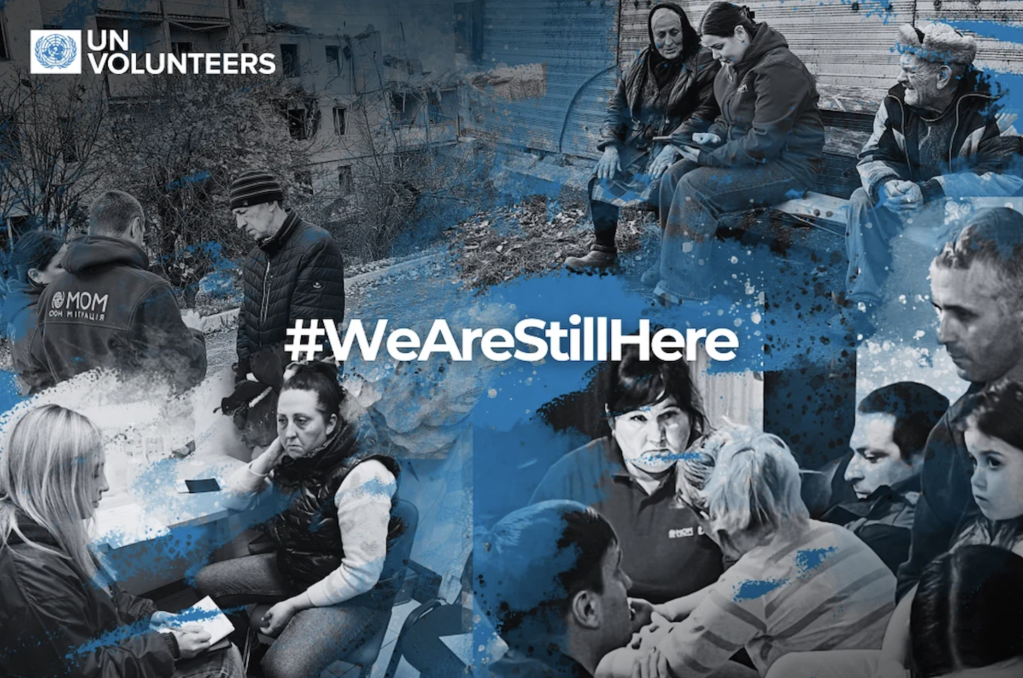
The efforts of volunteers and humanitarian workers remain crucial in addressing the ongoing challenges. Let's hear from some of the volunteers who support United Nations on the ground in Ukraine and in the neighbouring countries. “Volunteering is more than just helping—it’s a way to build a stronger society. Despite the challenges, we are still here. We don’t wait for circumstances to change; we become the change we want to see,” said Yulia Kutsokon, UN Volunteer Programme Assistant with UNFPA.Online Volunteer, Marharyta Starynets served in an assignment related to social listening and digital engagement for the United Nations Children's Fund (UNICEF) in Romania. "Social listening helps us understand what Ukrainians with temporary protection in Romania need by monitoring discussions on platforms like Telegram and Facebook. As Online Volunteers, we track key topics such as education, healthcare, and housing, compiling weekly reports to address their challenges. Social listening seems far more complex than it sounds. That's especially true in instances where we are dealing with different language mixtures and dialects that the tools might not understand. That's where my role comes in handy. For instance in some Ukrainian villages, people speak a mix of Russian and Ukrainian called 'surzhyk' and it's certainly not easy for social listening tools to catch on. Here my role is to read through social media posts, comments, and messages, and try to make sense of the communication."“Despite technical difficulties and emotional stress, our work ensures that vital information reaches those who need it most”
Marharyta Starynets, Online Volunteer with UNICEF Romania.Hanna Doroshenko, UN Volunteer PSEA Officer with the United Nations Development Programme (UNDP) shares, "Today, life in Ukraine is incredibly difficult—economically, materially, and emotionally. Ukrainian women, in particular, face severely limited opportunities. That is why I choose to volunteer. It is my way of contributing to the transformation of our society, of offering my humble share in the development of our nation." “Volunteering not only inspires me but also changes me in the process,” said Hanna Doroshenko, UN Volunteer with UNDP Ukraine.Polina Galagan, UN Volunteer Veteran Support Associate with UNDP shares, "I am happy with my work, but it is far from easy. Performing well in this field requires a deep understanding of the bigger picture, especially the psychological state of veterans. Our work focuses on training specialists who support veterans and their families, which means knowing every detail of their mental and emotional challenges.”Andriy Kolobov, UN Volunteer Support Associate is part of UNV Ukraine, "As part of the UN Volunteers team in Ukraine, I felt immense pride when we swiftly deployed the United Nations Population Fund (UNFPA) and UNDP personnel to help restore Ukraine’s energy security. We also supported the resettlement of people from Pokrovsk, a temporarily occupied territory."“Witnessing the immediate impact of our efforts reinforced the power of volunteering in times of crisis,” said Andriy Kolobov, UN Volunteer Support Associate with UNV Ukraine. Two hundred and sixty-four UN Volunteers, 63 percent of whom were women, served across Ukraine, primarily with UNDP, UNFPA, IOM, and UN Women in 2024. Their diverse fields of service addressed various needs, including crisis response, assessment for environmental damage, quality education for all, distribution of humanitarian aid, and more. Additionally, 80 Online Volunteers from six countries supported emergency response efforts through digital channels. Demonstrating compassion, courage, and commitment through volunteering. Standing in solidarity, United Nations Volunteers #WeAreStillHere.Source: UN Volunteers
Marharyta Starynets, Online Volunteer with UNICEF Romania.Hanna Doroshenko, UN Volunteer PSEA Officer with the United Nations Development Programme (UNDP) shares, "Today, life in Ukraine is incredibly difficult—economically, materially, and emotionally. Ukrainian women, in particular, face severely limited opportunities. That is why I choose to volunteer. It is my way of contributing to the transformation of our society, of offering my humble share in the development of our nation." “Volunteering not only inspires me but also changes me in the process,” said Hanna Doroshenko, UN Volunteer with UNDP Ukraine.Polina Galagan, UN Volunteer Veteran Support Associate with UNDP shares, "I am happy with my work, but it is far from easy. Performing well in this field requires a deep understanding of the bigger picture, especially the psychological state of veterans. Our work focuses on training specialists who support veterans and their families, which means knowing every detail of their mental and emotional challenges.”Andriy Kolobov, UN Volunteer Support Associate is part of UNV Ukraine, "As part of the UN Volunteers team in Ukraine, I felt immense pride when we swiftly deployed the United Nations Population Fund (UNFPA) and UNDP personnel to help restore Ukraine’s energy security. We also supported the resettlement of people from Pokrovsk, a temporarily occupied territory."“Witnessing the immediate impact of our efforts reinforced the power of volunteering in times of crisis,” said Andriy Kolobov, UN Volunteer Support Associate with UNV Ukraine. Two hundred and sixty-four UN Volunteers, 63 percent of whom were women, served across Ukraine, primarily with UNDP, UNFPA, IOM, and UN Women in 2024. Their diverse fields of service addressed various needs, including crisis response, assessment for environmental damage, quality education for all, distribution of humanitarian aid, and more. Additionally, 80 Online Volunteers from six countries supported emergency response efforts through digital channels. Demonstrating compassion, courage, and commitment through volunteering. Standing in solidarity, United Nations Volunteers #WeAreStillHere.Source: UN Volunteers
1 of 5
Story
05 December 2025
Keeping the heat on
As communities in Mykolaiv, Ukraine continue to grapple with the impacts of the ongoing war, UNOPS and the government of Denmark are helping utility workers keep the city’s heating services functioning with advanced emergency repair vehicles.Since late 2022, UNOPS and the government of Denmark have been working to address critical needs in Mykolaiv city and the surrounding region, which sustained heavy damage in the wake of Russia’s full-scale invasion.For the city’s residents, everyday life and recovery efforts are still hindered by constant threats of drones and missiles, as well as damage to critical infrastructure – including the city’s utility networks. As the cold winter months loom, utility companies are getting ready to tackle all kinds of emergencies that could disrupt access to heating and water for local residents.To support these preparation efforts, the government of Denmark and UNOPS delivered 10 emergency repair vehicles to the Mykolaiv region. Four of these joined a fleet of vehicles owned by Mykolaiv-obl-teplo-energo (MOTE), the municipal heating company that maintains 450 kilometres of heating piping network (almost as large as that in Paris). “A similar vehicle helped us eliminate 17 emergencies – sometimes, the crew would arrive at the site of the emergency and identify that a pipe ruptured inside a reinforced concrete support. In the past, extra staff and auxiliary equipment would have to be withdrawn from elsewhere to help, costing us time. Now, the crew can make do with just a single vehicle,” said Oleksandr Ivanov - Deputy chief technical officer, Mykolaiv-obl-teplo-energo.Before emergency crews can use the new vehicles, they will be trained to use the equipment kit that comes with every vehicle. This includes a submersible trash pump, impact tools and grinders powered by a compact 18-horsepower petrol hydraulic unit. There is a welder-generator that enables both power and on-site welding, eliminating the need for an external power source. This kit makes each vehicle a stand-alone mobile emergency repair station that can cover the typical range of emergency work: pumping dirty water away from wells and pits, safely operating hydraulic tools in wet conditions, cutting and stopping pipes, and opening concrete slabs.
Among the participants of a recent equipment training session is Tetiana Orlovska, a heating district supervisor with over 35 years of experience. A certified construction engineer, she is no stranger to burst head pipes.In the winter, Tetiana oversees boiler houses and the work of the mechanics, making sure everything runs smoothly. During the warmer months when heating is turned off, she conducts hydraulic tests of the heating grid and prepares boiler houses for the next heating season. “The new vehicles will increase our efficiency. Faster repairs mean less downtime for consumers. They also mean our teams can get more done in a unit of time … It’s an all-round improvement,” said Tetiana Orlovska - heating district supervisor, Mykolaiv-obl-teplo-energo.The increased efficiency is particularly important given the strain on MOTE’s human resources due to the ongoing war. While the utility company has partnered with the local university to train future heat and power experts, and offered paid work for undergraduates, enhancing efficiency is vital. “It’s a tough job: we respond to emergencies 24/7, often working late into the night in freezing temperatures … The new emergency repair vehicles will speed up the works, quickly releasing the crew to deal with other challenges,” said Artem Polishchuk - Head, 6th heating district, Mykolaiv-obl-teplo-energo.The challenges faced by war-time Mykolaiv remain numerous. Working together with the government of Denmark and local partners, UNOPS is helping deliver practical solutions to sustain critical systems and lay the foundations for sustainable recovery.About the projectUNOPS partnership with the government of Denmark under the ‘Procurement of goods and services for the restoration of Ukraine’ project is focused on restoring and strengthening utility services in Mykolaiv and the surrounding region, laying the foundations for local recovery.Implemented since late 2022, with a total budget of over $25 million, it has provided over 350 generators to power essential municipal sites, 19 mobile heating units to keep hospitals and schools warm, 12 city buses, 27 school buses, 67 utility vehicles, 16 fire extinguishing modules, and water supply solutions (28 water towers and eight water pumps), all aimed at maintaining essential community systems.A smaller component of the project also supported Kharkiv and Dnipro and Zaporizhizhia by providing 11 school buses, five water trucks and six loader excavators for Dnipro, 11 school buses for Kharkiv and five loader excavators for Zaporizhzhia oblasts. The project is set to run until 2026.
Among the participants of a recent equipment training session is Tetiana Orlovska, a heating district supervisor with over 35 years of experience. A certified construction engineer, she is no stranger to burst head pipes.In the winter, Tetiana oversees boiler houses and the work of the mechanics, making sure everything runs smoothly. During the warmer months when heating is turned off, she conducts hydraulic tests of the heating grid and prepares boiler houses for the next heating season. “The new vehicles will increase our efficiency. Faster repairs mean less downtime for consumers. They also mean our teams can get more done in a unit of time … It’s an all-round improvement,” said Tetiana Orlovska - heating district supervisor, Mykolaiv-obl-teplo-energo.The increased efficiency is particularly important given the strain on MOTE’s human resources due to the ongoing war. While the utility company has partnered with the local university to train future heat and power experts, and offered paid work for undergraduates, enhancing efficiency is vital. “It’s a tough job: we respond to emergencies 24/7, often working late into the night in freezing temperatures … The new emergency repair vehicles will speed up the works, quickly releasing the crew to deal with other challenges,” said Artem Polishchuk - Head, 6th heating district, Mykolaiv-obl-teplo-energo.The challenges faced by war-time Mykolaiv remain numerous. Working together with the government of Denmark and local partners, UNOPS is helping deliver practical solutions to sustain critical systems and lay the foundations for sustainable recovery.About the projectUNOPS partnership with the government of Denmark under the ‘Procurement of goods and services for the restoration of Ukraine’ project is focused on restoring and strengthening utility services in Mykolaiv and the surrounding region, laying the foundations for local recovery.Implemented since late 2022, with a total budget of over $25 million, it has provided over 350 generators to power essential municipal sites, 19 mobile heating units to keep hospitals and schools warm, 12 city buses, 27 school buses, 67 utility vehicles, 16 fire extinguishing modules, and water supply solutions (28 water towers and eight water pumps), all aimed at maintaining essential community systems.A smaller component of the project also supported Kharkiv and Dnipro and Zaporizhizhia by providing 11 school buses, five water trucks and six loader excavators for Dnipro, 11 school buses for Kharkiv and five loader excavators for Zaporizhzhia oblasts. The project is set to run until 2026.
1 of 5

Story
10 November 2025
Bringing support and social connection to isolated war-affected people in Ukraine
The full-scale war in Ukraine, claiming lives, uprooting millions and causing mass destruction, has also left many vulnerable people in very difficult and isolated situations, without social support, in hardship and loneliness.
Whether it is an 80-year-old woman living alone on the 10th floor without electricity, a newly evacuated person with limited mobility arriving in a new community not knowing anyone, or an elderly couple that have returned to a remote area devastated by war. This is where social facilitators, trained community volunteers, step in to provide neighbourly basic social support.
Social facilitation - a new community-based protection model complements state social services and provides basic, tangible assistance that makes daily life more manageable. This could include carrying firewood, delivering water, accompanying someone to the medical clinic or grocery store, or simply spending time in conversation.
The facilitators act like a bridge between the people and the state social protection system: While on the one hand, the state’s social services can refer people to the programme, on the other hand, social facilitators help people access social services. “When someone comes to visit me, it means a lot” In the village of Chervona Dolyna in the Mykolaiv region, social facilitators have become a vital part of daily life for many residents. 77-year-old Lyudmyla Buts is one of them.
She never left home. Even during months of shelling and hostilities right at her doorstep in the beginning of the full-scale invasion, and now as the war is ongoing. Her son serves in the military, and her daughter, who lives in Kherson, cannot be by her side. With chronic health issues and a pension of just 4,000 UAH (approx. USD 96) a month, she was not able to evacuate. When explosions damaged her home, UNHCR and its NGO partner the Tenth of April stepped in with emergency repairs, and mobile brigades fixed the roof and replaced shattered windows. But the greatest change in Lyudmyla’s life came with the weekly visits from a social facilitator, also called Lyudmyla (Komyrets), who supports her around the house.
“Imagine, I am 77 years old. It is no longer easy for me to carry buckets. Once a week, Lyudmyla comes, and I am so glad about this. She helps me to carry coal and firewood, bring water, or pick up my medicine. When someone comes to visit me, it means a lot,” says Lyudmyla Buts.Support that makes a differenceThe social facilitators are trained volunteers from the same communities who act as “good neighbors,” ensuring that the most vulnerable people impacted by the war—including older people, persons with disabilities, internally displaced people and returnees living alone—are not isolated or forgotten.
“I take care of six people in our village—mostly elderly, and two of them have disabilities. Of course, they need practical help with everyday things,” explains Lyudmyla Komyrets, 41, the social facilitator in Chervona Dolyna.
But according to her, the role of a social facilitator goes far beyond helping around the household.
“I officially dedicate one day a week, but I often try to do more. Sometimes I come at noon, sometimes in the evening, just to be there for them. I give as much as I can,” she says.
“People need someone to talk to, someone who listens. Communication is vital. It helps people, and it gives them the connection they are missing. There are no social workers in our village, so I step in to fill this gap,” highlights Lyudmyla. “It is not only the help—it is the conversation” A few houses away lives Mariia Kovtunyuk, 83. At the start of the full-scale invasion, Mariia and her husband, who had a serious physical disability, sheltered in their basement for three days under heavy bombardment, before fleeing to Odesa to stay with relatives. When they returned in March 2023, they found their home damaged by shelling and shrapnel.
They repaired what they could themselves, but not long after, Mariia’s husband passed away, leaving her to cope with grief and daily survival alone. It was then that the social facilitator program became an anchor in her life. Through regular visits, Lydmila Komyrets, her facilitator, supported Mariia not only with access to essentials but also with companionship and small acts of kindness.
“Lyudmyla comes whenever I need her. She helps me get to the medical point, brings what is necessary, and always checks in. Sometimes she even helps with things that are not her job,” says Mariia.
“It is not only the help—it is also the conversation. To sit together, to talk, to not feel alone. For me, that is the most important support,” she adds. What started as a pilot initiative launched in late 2024 with UNHCR’s partner Tenth of April with 10 social facilitators in Mykolaiv Region, has grown into a community of over 100 facilitators active in over 90 communities in 13 regions. In the first nine months of 2025, facilitators have already supported over 5,000 people, providing tangible help to people that makes their daily life a little easier, more hopeful and less lonely.
The social facilitators programme not only supports people, but it also supports the state social protection system by complementing and reinforcing it.By Tetiana Kuras and Denys Kovalskyi
Whether it is an 80-year-old woman living alone on the 10th floor without electricity, a newly evacuated person with limited mobility arriving in a new community not knowing anyone, or an elderly couple that have returned to a remote area devastated by war. This is where social facilitators, trained community volunteers, step in to provide neighbourly basic social support.
Social facilitation - a new community-based protection model complements state social services and provides basic, tangible assistance that makes daily life more manageable. This could include carrying firewood, delivering water, accompanying someone to the medical clinic or grocery store, or simply spending time in conversation.
The facilitators act like a bridge between the people and the state social protection system: While on the one hand, the state’s social services can refer people to the programme, on the other hand, social facilitators help people access social services. “When someone comes to visit me, it means a lot” In the village of Chervona Dolyna in the Mykolaiv region, social facilitators have become a vital part of daily life for many residents. 77-year-old Lyudmyla Buts is one of them.
She never left home. Even during months of shelling and hostilities right at her doorstep in the beginning of the full-scale invasion, and now as the war is ongoing. Her son serves in the military, and her daughter, who lives in Kherson, cannot be by her side. With chronic health issues and a pension of just 4,000 UAH (approx. USD 96) a month, she was not able to evacuate. When explosions damaged her home, UNHCR and its NGO partner the Tenth of April stepped in with emergency repairs, and mobile brigades fixed the roof and replaced shattered windows. But the greatest change in Lyudmyla’s life came with the weekly visits from a social facilitator, also called Lyudmyla (Komyrets), who supports her around the house.
“Imagine, I am 77 years old. It is no longer easy for me to carry buckets. Once a week, Lyudmyla comes, and I am so glad about this. She helps me to carry coal and firewood, bring water, or pick up my medicine. When someone comes to visit me, it means a lot,” says Lyudmyla Buts.Support that makes a differenceThe social facilitators are trained volunteers from the same communities who act as “good neighbors,” ensuring that the most vulnerable people impacted by the war—including older people, persons with disabilities, internally displaced people and returnees living alone—are not isolated or forgotten.
“I take care of six people in our village—mostly elderly, and two of them have disabilities. Of course, they need practical help with everyday things,” explains Lyudmyla Komyrets, 41, the social facilitator in Chervona Dolyna.
But according to her, the role of a social facilitator goes far beyond helping around the household.
“I officially dedicate one day a week, but I often try to do more. Sometimes I come at noon, sometimes in the evening, just to be there for them. I give as much as I can,” she says.
“People need someone to talk to, someone who listens. Communication is vital. It helps people, and it gives them the connection they are missing. There are no social workers in our village, so I step in to fill this gap,” highlights Lyudmyla. “It is not only the help—it is the conversation” A few houses away lives Mariia Kovtunyuk, 83. At the start of the full-scale invasion, Mariia and her husband, who had a serious physical disability, sheltered in their basement for three days under heavy bombardment, before fleeing to Odesa to stay with relatives. When they returned in March 2023, they found their home damaged by shelling and shrapnel.
They repaired what they could themselves, but not long after, Mariia’s husband passed away, leaving her to cope with grief and daily survival alone. It was then that the social facilitator program became an anchor in her life. Through regular visits, Lydmila Komyrets, her facilitator, supported Mariia not only with access to essentials but also with companionship and small acts of kindness.
“Lyudmyla comes whenever I need her. She helps me get to the medical point, brings what is necessary, and always checks in. Sometimes she even helps with things that are not her job,” says Mariia.
“It is not only the help—it is also the conversation. To sit together, to talk, to not feel alone. For me, that is the most important support,” she adds. What started as a pilot initiative launched in late 2024 with UNHCR’s partner Tenth of April with 10 social facilitators in Mykolaiv Region, has grown into a community of over 100 facilitators active in over 90 communities in 13 regions. In the first nine months of 2025, facilitators have already supported over 5,000 people, providing tangible help to people that makes their daily life a little easier, more hopeful and less lonely.
The social facilitators programme not only supports people, but it also supports the state social protection system by complementing and reinforcing it.By Tetiana Kuras and Denys Kovalskyi
1 of 5

Story
06 November 2025
Youth Shaping Ukraine’s Future Together with the UN in Kharkiv
Two days ahead of the 80th anniversary of the United Nations, on 22 October, more than 75 students and young leaders from Kharkiv and the region came together at a joint event organized by the United Nations jointly with Karazin National University Kharkiv to discuss how young people can contribute to positive change in their communities. Check out the photo story from the event: The young people were welcomed by the representatives of the University and UN agencies at the underground modern art space – Yermilov Centre that has become a symbol of Kharkiv’s creativity and unbreakable spirit. The UN Resident Coordinator and Humanitarian Coordinator in Ukraine, Matthias Schmale, and Vice-Rector of Karazin University, Anatoliy Babichev, opened event. The representatives from UNICEF Ukraine and UNFPA interacted with participants encouraging them to describe their experience in participating in youth engagement initiatives, including Youth Councils. UN Head in Ukraine busted some of the most prevailing myths about the UN while challenging youth to think about solutions to a range of issues. The second part of the event was devoted to the young people working in the groups. They were tasked to determine the most pressing issues in their community and develop innovative solutions and suggest concrete project for the UN to implement. Surrounded by exhibitions and installations, young participants shared their visions for Ukraine’s recovery, exchanging experiences. They focused on such a challenging topics like mental health support, gender-based violence, lack of the employment opportunities for young people who just finished the university. Also, they touched upon the questions of demining and need for restoration of social infrastructure and services. As part of the event, participants also attended the opening of the photo exhibition “Shared Lives, Shared Future,” marking the 80th anniversary of the United Nations. The exhibition highlights how UN projects transform people’s lives helping communities recover, unlock new opportunities, and build a future where no one is left behind. “Events like this show that Kharkiv is not only a city that stands strong, but a city that thinks about the future,” underlined Head of the UN in Ukraine Matthias Schmale during the closing discussion.
1 of 5

Story
03 November 2025
From Destruction to Restoration: The Story of a College in Katyuzhanka
After extensive fires and the loss of equipment, the college has reopened its doors to 450 students, who can now acquire practical skills in the renovated facilities — taking a step toward rebuilding their own future and the country.The village of Katyuzhanka in the Kyiv region has always been a vibrant community. Since 1953, the Katyuzhanka Vocational College has been operating continuously, renowned for training skilled professionals across a range of fields — from agriculture and transport to food technology and service industries. The college has become a hub of opportunities for young people seeking practical knowledge and professional skills. Under these conditions, continuing education was impossible and unsafe. Only later was the learning process resumed online. However, remote learning can never fully replace in-person education, especially when it comes to practical training. This is particularly important for the college, as it prepares future chefs, tractor operators, drivers, and other tradespeople that the country urgently needs.Over the years, the Katyuzhanka Vocational College has trained around 25,000 skilled professionals across 15 vocational specialties. They successfully work in key areas of the agro-industrial sector, manage enterprises and educational institutions, and continue their studies at higher education institutions.
The destruction caused by the war was extensive. Some of the college’s facilities were restored through the efforts of the local community, while others were repaired with the support of international partners, including UNOPS.The college was included in the scope of the “School Repairs in Ukraine” project, implemented by UNOPS with financial support from the European Union. The renovation work focused on several rooms that had suffered the most from the fires.Now, repair works at the college have been completed, and the facilities are ready for practical lessons in the new academic year. Looking at the photos after the restoration, it is hard to believe that a major fire once occurred here. On 1 September this year, the college reopened its doors to students. They can now continue their studies in the renovated facilities. “The restored college provides continuous education, retraining, and skills development for members of the community, which is key to adapting to change and successfully rebuilding the country. This year, we started the academic year with 450 students, and the renovated facilities are already being used to train skilled workers in agriculture, mechanization and transport, food technology, and the service sector,” said Ruslan Nedashkivskyi, the college director. About the projectThe Schools Repairs in Ukraine project, funded by the European Union and implemented by UNOPS, aims to repair educational facilities that have been damaged during the ongoing conflict in Ukraine. This $30 million initiative is being implemented in the regions of Chernihiv, Kyiv, Sumy and Kharkiv, focusing on schools requiring light to medium repair work.The primary objective of the project is to provide access to repaired school facilities which will increase the proportion of children receiving face-to-face education. By rehabilitating more than 70 schools, the project will help restore facilities to a safe and welcoming environment where students can continue their education without interruption.
The destruction caused by the war was extensive. Some of the college’s facilities were restored through the efforts of the local community, while others were repaired with the support of international partners, including UNOPS.The college was included in the scope of the “School Repairs in Ukraine” project, implemented by UNOPS with financial support from the European Union. The renovation work focused on several rooms that had suffered the most from the fires.Now, repair works at the college have been completed, and the facilities are ready for practical lessons in the new academic year. Looking at the photos after the restoration, it is hard to believe that a major fire once occurred here. On 1 September this year, the college reopened its doors to students. They can now continue their studies in the renovated facilities. “The restored college provides continuous education, retraining, and skills development for members of the community, which is key to adapting to change and successfully rebuilding the country. This year, we started the academic year with 450 students, and the renovated facilities are already being used to train skilled workers in agriculture, mechanization and transport, food technology, and the service sector,” said Ruslan Nedashkivskyi, the college director. About the projectThe Schools Repairs in Ukraine project, funded by the European Union and implemented by UNOPS, aims to repair educational facilities that have been damaged during the ongoing conflict in Ukraine. This $30 million initiative is being implemented in the regions of Chernihiv, Kyiv, Sumy and Kharkiv, focusing on schools requiring light to medium repair work.The primary objective of the project is to provide access to repaired school facilities which will increase the proportion of children receiving face-to-face education. By rehabilitating more than 70 schools, the project will help restore facilities to a safe and welcoming environment where students can continue their education without interruption.
1 of 5

Press Release
03 December 2025
Call for Submissions by the United Nations Independent International Commission of Inquiry on Ukraine
The Commission in particular values first-hand information provided by survivors of events, their relatives, and witnesses. It investigates reports of violations and crimes in all areas directly impacted by the conflict, regardless of the identity, nationality, or origin of the alleged perpetrators. The Commission is interested in information on the following issues regarding both parties to the armed conflict, as applicable:
• Violation of fair trial guarantees and in particular the use of torture to obtain evidence.
• Transfer or deportation of children, obstacles to their return to Ukraine, prolonged foster placement and adoption.
• Education of children in occupied territories, including extracurricular activities, notably those involving a military component and those which may contravene the relevant provisions of international law.
• Sexual and gender-based violence and the impact on survivors, including challenges faced by them to get support.
• Violations committed by armed forces’ commanders against members of their own forces, including during mobilization. The Commission attaches the utmost importance to the protection of sources, notably concerning the respect for confidentiality and the ‘do no harm’ principle (not to jeopardize the life, safety, freedom and well-being of victims, witnesses and other cooperating persons). It will only disclose the identity of cooperating persons, if there is informed consent from them and will use the information provided in accordance with their stated wishes. Furthermore, the Commission takes all possible measures to ensure protection of information, including through the use of appropriate information communication technologies. It should be noted that not all information sent to the Commission will necessarily be reflected in the reports. To preserve the security and confidentiality of the information submitted, it is recommended to submit through the secure cloud created by the Commission for this purpose. Please upload all your documents to the cloud. Should you have any questions, including on how to submit information in a different way, please contact the Commission at: coi-ukraine@un.org Background: The Commission was established by the UN Human Rights Council in March 2022 to investigate violations and abuses of human rights, violations of international humanitarian law, and related crimes in the context of the Russian Federation’s aggression against Ukraine. In April 2025 its mandate was renewed for one additional year.
The Commissioners were appointed by the President of the UN Human Rights Council; they are not UN staff and do not receive a salary for their work. While the UN Human Rights Office provides support to the Commission of Inquiry, the commissioners serve in their individual capacity and are independent from any government or organization, including the UN. Any views or opinions presented herein are solely those of the mandated Commissioners.Contact information:
Saule Mukhametrakhimova, Media Adviser, Commission of Inquiry on Ukraine, saule.mukhametrakhimova@un.org, + 43 6763 493464
• Violation of fair trial guarantees and in particular the use of torture to obtain evidence.
• Transfer or deportation of children, obstacles to their return to Ukraine, prolonged foster placement and adoption.
• Education of children in occupied territories, including extracurricular activities, notably those involving a military component and those which may contravene the relevant provisions of international law.
• Sexual and gender-based violence and the impact on survivors, including challenges faced by them to get support.
• Violations committed by armed forces’ commanders against members of their own forces, including during mobilization. The Commission attaches the utmost importance to the protection of sources, notably concerning the respect for confidentiality and the ‘do no harm’ principle (not to jeopardize the life, safety, freedom and well-being of victims, witnesses and other cooperating persons). It will only disclose the identity of cooperating persons, if there is informed consent from them and will use the information provided in accordance with their stated wishes. Furthermore, the Commission takes all possible measures to ensure protection of information, including through the use of appropriate information communication technologies. It should be noted that not all information sent to the Commission will necessarily be reflected in the reports. To preserve the security and confidentiality of the information submitted, it is recommended to submit through the secure cloud created by the Commission for this purpose. Please upload all your documents to the cloud. Should you have any questions, including on how to submit information in a different way, please contact the Commission at: coi-ukraine@un.org Background: The Commission was established by the UN Human Rights Council in March 2022 to investigate violations and abuses of human rights, violations of international humanitarian law, and related crimes in the context of the Russian Federation’s aggression against Ukraine. In April 2025 its mandate was renewed for one additional year.
The Commissioners were appointed by the President of the UN Human Rights Council; they are not UN staff and do not receive a salary for their work. While the UN Human Rights Office provides support to the Commission of Inquiry, the commissioners serve in their individual capacity and are independent from any government or organization, including the UN. Any views or opinions presented herein are solely those of the mandated Commissioners.Contact information:
Saule Mukhametrakhimova, Media Adviser, Commission of Inquiry on Ukraine, saule.mukhametrakhimova@un.org, + 43 6763 493464
1 of 5
Press Release
03 December 2025
General Assembly demands return of Ukrainian children by Russia
The draft resolution during the emergency special session was approved by 91 votes in favour, 12 against and 57 abstentions, surpassing the required two-thirds majority of members present and voting.The resolution expresses deep concern about the fate of Ukrainian children separated from their families since 2014 – when Moscow annexed Crimea – including those transferred within occupied Ukrainian territory and those deported to Russia.It describes these acts as violations of the Geneva Conventions, which prohibit the forcible transfer or deportation of protected persons from occupied territory.Detailed resolutionIt “demands that the Russian Federation ensure the immediate, safe and unconditional return of all Ukrainian children who have been forcibly transferred or deported,” and urges Moscow to cease any further practices of deportation, separation from families, changes of citizenship, adoption or placement in foster families, and indoctrination.The text also calls on the UN Secretary-General to step up his good offices, including through his Special Representative for Children and Armed Conflict, to coordinate UN action, engage with Russia on tracking down those taken, and to ensure access for international monitoring and humanitarian organizations.It also expressed support for international initiatives to secure the prompt return of Ukrainian children and for their rehabilitation and reintegration, including access to health care, psychosocial support and education.Abducted at gunpointOpening the meeting, General Assembly President Annalena Baerbock described the ordeal faced by Ukrainian children taken from their homes.“Imagine you’re a 16-year-old going about your day […] when suddenly soldiers armed with machine guns wearing balaclavas to mask their faces burst into your home,” she said.“They force you into your vehicle and drive you away in an unknown direction, and you find yourself stuck for months in a nightmare, with a different name.”She stressed that international law is unambiguous.“What we are witnessing therefore is not merely a tragedy of some children, but a violation of international law,” Ms. Baerbock said, citing Article 49 of the Fourth Geneva Convention.Question of humanityPresenting the draft, Ukraine’s Deputy Foreign Minister Mariana Betsa said the text was “not about politics…it is about humanity.”Amid Russia’s war of aggression, she said, children have been killed, injured, raped, separated from their families and deported.“It is unimaginable that someone could view children as war trophies,” she said, adding that at least 20,000 Ukrainian children have been deported to Russia.“Not a single child should be separated from their family,” she stressed.Source: UN news
1 of 5
Press Release
27 November 2025
Government of Ukraine and UN sign Sustainable Development Cooperation Framework “Partnership for Recovery and Development 2025–2029”
“In wartime, cooperation with international partners is a prerequisite for our resilience. Partnership with the UN plays a key role in this, and today we are launching a new phase of that cooperation,” Taras Kachka said.The signed document sets out a shared vision and commitments between the Government of Ukraine and the UN to work together towards achieving national development priorities, strengthening state resilience, supporting reforms, and implementing the Sustainable Development Goals.
The Cooperation Framework was jointly prepared in 2024 and approved by the Government of Ukraine in October 2025. It outlines the main areas of support to Ukraine from the UN system and coordination mechanisms for the next five years. “The United Nations has a long history of supporting Ukraine, and this support is especially critical during the war. Today, more than 20 UN agencies are engaged in assisting Ukraine, working both inside the country and beyond its borders. This collective capacity is focused on advancing a ‘green’ recovery of critical infrastructure, supporting inclusive economic recovery, strengthening education, health and social services, and ensuring that among the most vulnerable affected by the war, no one is left behind. The Cooperation Framework will guide our work in the coming years and remind us that our shared purpose is to support the people of Ukraine,” emphasized Matthias Schmale, UN Resident and Humanitarian Coordinator in Ukraine. The signing of the Cooperation Framework is an important step in strengthening the strategic partnership between Ukraine and the United Nations, enabling a joint response to challenges and coordinated action.
The Cooperation Framework was jointly prepared in 2024 and approved by the Government of Ukraine in October 2025. It outlines the main areas of support to Ukraine from the UN system and coordination mechanisms for the next five years. “The United Nations has a long history of supporting Ukraine, and this support is especially critical during the war. Today, more than 20 UN agencies are engaged in assisting Ukraine, working both inside the country and beyond its borders. This collective capacity is focused on advancing a ‘green’ recovery of critical infrastructure, supporting inclusive economic recovery, strengthening education, health and social services, and ensuring that among the most vulnerable affected by the war, no one is left behind. The Cooperation Framework will guide our work in the coming years and remind us that our shared purpose is to support the people of Ukraine,” emphasized Matthias Schmale, UN Resident and Humanitarian Coordinator in Ukraine. The signing of the Cooperation Framework is an important step in strengthening the strategic partnership between Ukraine and the United Nations, enabling a joint response to challenges and coordinated action.
1 of 5
Press Release
25 November 2025
Civilian Casualties Mount as Russian Armed Forces Step Up Attacks on Ukraine’s Energy Infrastructure Ahead of Winter, UN Human Rights Monitors Say
This was the seventh such attack targeting energy infrastructure in multiple regions nationwide in the last two months.During a coordinated attack lasting from Monday night to Tuesday morning, Russian armed forces launched a reported 464 long-range drones and 22 missiles, primarily at Kyiv city, Odesa and Kyiv region. Munitions or their remnants struck residential buildings and civilian infrastructure, including energy and port facilities. In addition to killing and injuring civilians, the attacks disrupted electricity, water and heating in some areas.“Overnight, dozens of civilians were injured and at least eight reportedly killed as families again hunkered in hallways and shelters as explosions continued for hours outside their homes,” said Danielle Bell, head of HRMMU. “Millions of people across Ukraine fear for their loved ones each time hundreds of drones and missiles fly overhead, knowing that anyone can be harmed, no matter where they live.”Ukraine also conducted long-range drone strikes into Russia’s Krasnodar and Rostov regions, reportedly resulting in civilians being killed or injured.The Russian Federation has significantly increased long-range weapon use in 2025. Several recent large-scale attacks have involved more than 500 missiles and long-range drones deployed within a short period of time, targeting multiple regions, and saturating the airspace over major cities.Civilian casualties in major cities have spiked with the intensification of such attacks. Last year, from January to October 2024, long-range drones and missiles killed 434 and injured 2,045 civilians. In the same period in 2025, civilian deaths from long-range weapons increased by 26 per cent to 548 and civilian injuries increased by 75 per cent to 3,592. In Kyiv, for example, the number of civilian casualties in just the first ten months of 2025 was nearly four times higher than in the entire year of 2024. Other major urban centers, such as Dnipro and Zaporizhzhia, also saw significant increases in civilian casualties.“Beyond the horrific loss of life, civilian homes, buildings and public infrastructure are also destroyed, with reconstruction potentially taking years,” reiterated Ms. Bell. “Each new attack further compounds the psychological toll on civilians.” Recent waves of attacks on energy infrastructure have increased the cumulative strain on Ukraine’s energy system. Emergency outages in the aftermath of such attacks add to the already significant rolling blackouts that the population bears daily. Russian attacks on energy infrastructure facilities in Ukraine have left the majority of the regions nationwide with severe power shortages, as winter approaches and temperatures begin to drop.
1 of 5
Press Release
20 November 2025
UNHCR news comment: Deadly attacks in Western Ukraine show no part of country is safe
GENEVA – Wednesday’s devastating aerial attack on Ternopil, Western Ukraine, demonstrates clearly that no part of the country should be considered safe.The strike is reported to be one of the deadliest in Western Ukraine since the start of the full-scale war in 2022. Along with Ternopil, Lviv and Ivano-Frankivsk were also hit as reports indicate the number of dead has reached at least 25, with over 100 wounded and the emergency response ongoing. The attacks also damaged energy facilities, transport and civil infrastructure.Some countries have rejected claims for asylum or other forms of protection, as well as assistance, to Ukrainians on the grounds that parts of Ukraine are safe or that individuals could find safety in other parts of the country. These attacks remind us that no area is safe in Ukraine. UNHCR encourages all States hosting refugees from Ukraine to continue extending protection and assistance to those fleeing the war.This year’s increased attacks by the Russian Federation have exacerbated the suffering of Ukrainians still inside the country. For the fourth winter, Ukrainians face insecurity and the compounded exhaustion of living in a warzone, as the country’s energy infrastructure is being continuously attacked, limiting people’s ability to access essential heat and power. It is imperative that civilians are protected from the attacks.UNHCR and partners inside Ukraine will continue supporting the Government’s response to help civilians get through the challenging winter by providing cash assistance for firewood and warm clothes, repairing and insulating homes and collective sites hosting displaced people, as well as by providing generators and portable power stations to the most affected communities as part of UNHCR’s winter response.Further information:UNHCR’s Position on Returns to Ukraine, March 2022
UNHCR's Position on Voluntary Returns to Ukraine, June 2023
UNHCR's Recommendations on the Continued Use of Temporary Protection Arrangements and Guiding Principles for Transition in relation to the Ukraine Refugee Situation, May 2025.
OCHA's Humanitarian Coordinator statement on the attacks, November 2025.
Media contacts:
In Kyiv: Elisabeth Haslund, Haslund@unhcr.org, +380 95 239 0072
In Geneva: Eleni Biza, biza@unhcr.org, +41 78 337 8082
UNHCR's Position on Voluntary Returns to Ukraine, June 2023
UNHCR's Recommendations on the Continued Use of Temporary Protection Arrangements and Guiding Principles for Transition in relation to the Ukraine Refugee Situation, May 2025.
OCHA's Humanitarian Coordinator statement on the attacks, November 2025.
Media contacts:
In Kyiv: Elisabeth Haslund, Haslund@unhcr.org, +380 95 239 0072
In Geneva: Eleni Biza, biza@unhcr.org, +41 78 337 8082
1 of 5
Latest Resources
1 / 11


Resources
30 June 2025


1 / 11